Monday, 22 May 2017

Stages of Learning

Attribution Some rights reserved by pgbailey

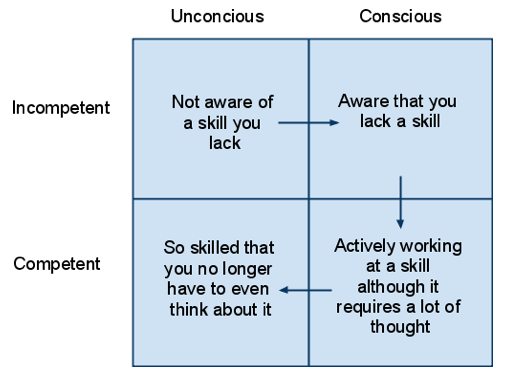
I do a lot of things in my off time, even though I really like doing nothing.  One of the things I'm doing this year is captaining/coaching a frisbee team.  We have a great coach we work with, and he was talking about stages of a great ultimate player, and I thought this applied a lot to learning too. 

I wonder how often we are stuck in the conscious incompetent stage. Without a learning coach or someone explicitly helping us become conscious and competent, how can we easily navigate our own life long learning.  

Part of the job I think I am good at is listening and helping shape consciousness and direct people towards competence.  When we can understand what we need to do to get better, I think it's much easier for us to make that progress, it's when we don't understand that we feel frustrated. 

As a beginner things can be liberating because we don't even know what we're doing wrong, everything is just kind of fun, but as we get through the process things can become more difficult. 

AttributionShare Alike
 Some rights reserved by tim.klapdor
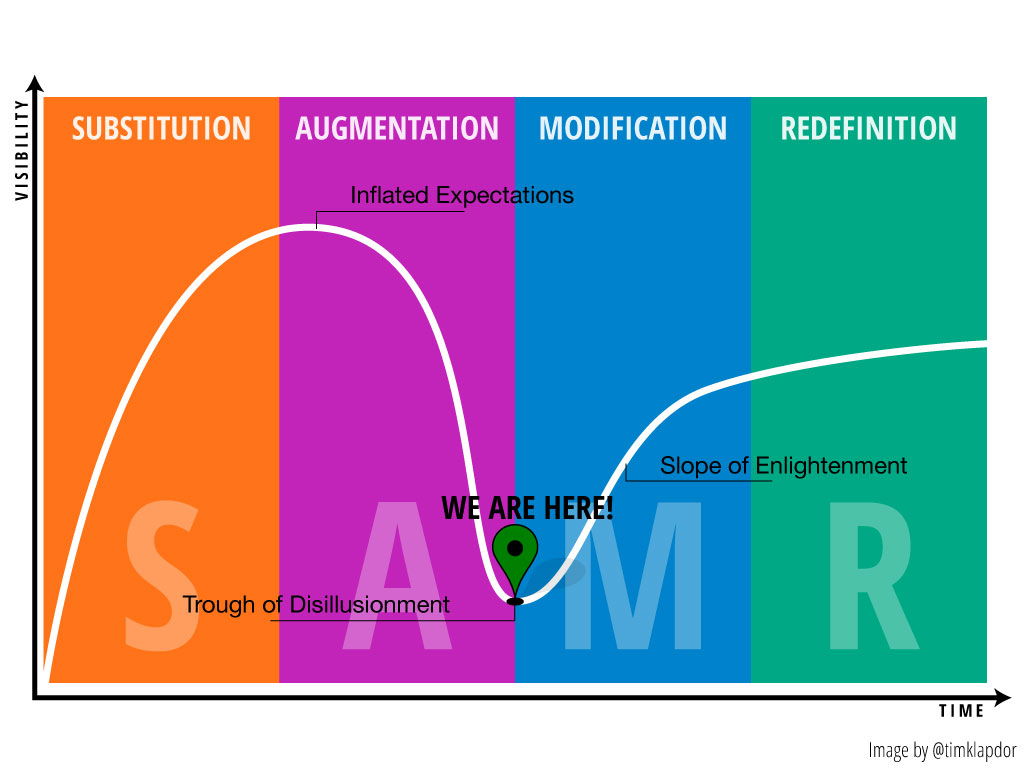
I think we can apply this easily to many aspects of our learning, but I like how this image shows the disappointment.  Once we start becoming more conscious we enter into this "trough of disillusionment". 

So how can we remain optimistic about the future like we are when we are unconscious and still promote and develop consciousness?


Monday, 8 May 2017

Tadpole habitat


We've been working on getting a home set up for our tadpoles, last week students researched what tadpoles needed to survive and this week they started putting the habitats together.  This is pretty great for us because when we went back outside, the water is all gone, so no home for our little friends.

As a learning journey the students loved it, they learned a lot about tadpoles (and it's still on going) and they are totally motivated to make the most out of their habitats, pretty exciting times.

Tuesday, 18 April 2017

New problems


We were walking in the outdoor discovery center the other day, and it looked like a lot of our problems (litter, dying plants, chalk) had disappeared, or been taken care of.  So we started looking for new things we could solve.  


It had been raining a lot, so there were lots of puddles (it's been a really strange rainy season here in Singapore).  Anyway, the learners found tadpoles. So currently we are wondering how we can make the tadpoles environment a little more secure.  It was an interesting day.

Tuesday, 11 April 2017

Changes in the Garden


We've just returned from a holiday and looking out in the garden we've seen a lot of new wood covering the ground.  We're going to use this to look into how systems change when humans try to make differences in our shared world.  Should be interesting.

Tuesday, 21 March 2017

Touching plants


When we're outside with the little ones we're looking for ways to engage their thinking, and hopefully drive some inquiry. One of the first things we do (and then we revisit it) is walking around touching, smelling and looking at different plants.  We try to do this so we get a better understanding of where we are, as well as feel more comfortable when working with other living things. 

Wednesday, 8 March 2017

Second instalment


This is the second instalment of our itime with the grade 2 cca learners.  So far they have looked at some of the problems they see in the outdoor discovery center.  One of the larger problems they've recognized is the holes in the roof. Last week they were thinking about the different materials that could used for the roof. We thought of the idea of wood, and leaves.  We then looked around the garden to see if we could find anything around to fix it with.  Right now, we're not sure we can actually finish this "on time" but it's something we're working on.


Monday, 6 March 2017

Trying video


Alright I'm trying something new.

Working in the ODC these past two years has been pretty good, this year for a CCA we're having students develop like an itime, 20%time, maker space type thing, it's going to take forever, and it likely won't be great as a first go, but I take 18 grade 2 students out here three times a week for forty minutes to find problems and look for solutions.

The first bit was really just getting them used to the space, and the idea that problems exist in our real world.

We've found two, which i'll get into later on, but I wanted to introduce you (to part of at least) the space we're working in for right now